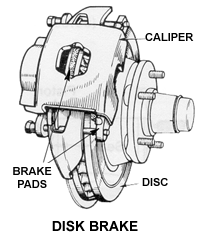
Understand the System
Disc brakes are simple in appearance, but every part must move correctly. Pads, rotors, calipers, hardware, and hydraulic parts all matter.
Call Us:
615-946-2079 

Brake pads, rotors, calipers, slide pins, brake hardware, grinding brakes, squeaks, and brake pulsation diagnosis.
Disc brake repair looks simple, but a brake job that lasts depends on cleaning, lubrication, correct pad fitment, proper tools, and careful inspection.
At Rock Bridge Automotive Repair, we do more than slap pads on a vehicle. We fix the brake system correctly.
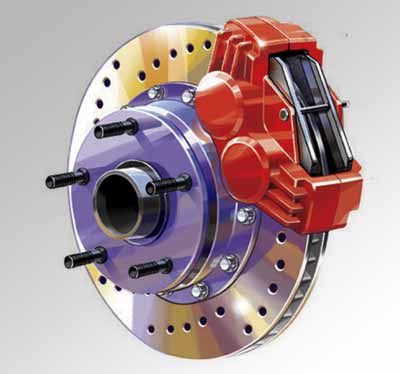
Disc Brake Repair Done Right
A good disc brake repair includes pads, rotors, calipers, slide pins, brackets, hardware, brake hoses, and the way every part moves together.
Disc brake repair is a classic example of why people should have their vehicles repaired by trained, certified automotive technicians. People look at the disc brake assembly and say, “I can fix those. I do not have to pay a mechanic for that.”
That is not always true. Many disc brake repairs are done incorrectly. Customers often say, “The first set of brakes lasted for years, but every set after that only lasted about a year.” When that happens, the vehicle is not always the problem. The repair may not have been done correctly.
Brake life depends on the vehicle, driving habits, hills, towing, stop-and-go traffic, parts quality, and the condition of the entire brake system. But when pads bind in the brackets, slide pins stick, hardware is dry, or calipers do not release, even good brake parts can fail early.
The single biggest problem with disc brake repairs is poor training and careless assembly. Many technicians learn from someone who was self-taught, and bad habits get passed from one person to another.
These mistakes can cause squeaking, grinding, uneven pad wear, brake pulsation, overheating, pulling, poor stopping, and brake parts that wear out far too soon.
Modern brake systems often work closely with anti-lock braking systems, traction control systems, and stability control systems. If your ABS light is on or the vehicle is storing brake system trouble codes, visit our ABS brake repair page.
Many brake warning lights and electronic brake problems require advanced scan tools and computer diagnostics before parts are replaced. Learn more about our automotive diagnostic services.
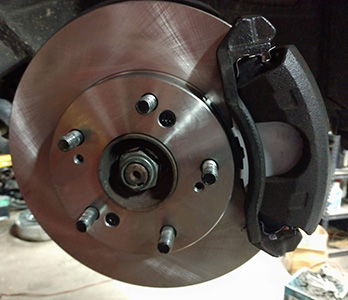
Training Matters
I believe every technician performing brake repair should be properly trained. Brake work is not just another job. When we repair brakes, we are working on the system that protects the driver, passengers, and everyone else on the road.
At Rock Bridge Automotive Repair, brake repair is treated seriously. We inspect the brake system, use the correct tools, clean what needs to be cleaned, lubricate what needs to be lubricated, and make sure the parts fit and move correctly.
Brake Repair Details
Disc brakes are simple in appearance, but every part must move correctly. Pads, rotors, calipers, hardware, and hydraulic parts all matter.
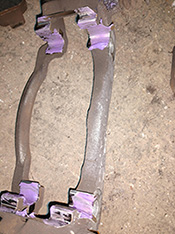
The caliper bracket must be cleaned and lubricated correctly so the pads can move freely without binding or wearing unevenly.
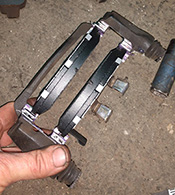
Brake pads must slide easily in the bracket. If they bind, the brakes can drag, squeak, overheat, or wear out early.
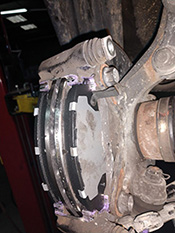
Inner and outer pads, clips, and wear indicators must be installed in the correct position. Small mistakes can create big problems.
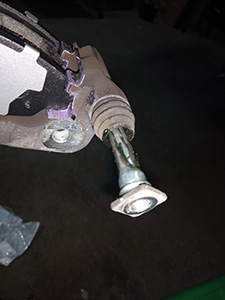
Slide pins let the caliper move and release. Dry or stuck slide pins can ruin new pads and rotors quickly.
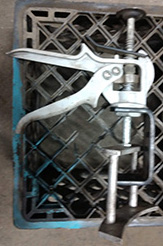
Proper caliper tools help compress pistons evenly and reduce the chance of damaging seals, boots, or caliper parts.
Brake Symptoms
Brake vibration and steering wheel shake are not always caused by brake parts alone. Worn suspension and steering components can also create shaking, pulling, and unstable braking. Learn more about our suspension and steering repair services.
Questions and Answers
Common signs include grinding, squealing, brake vibration, pulsation, longer stopping distance, brake pull, a soft pedal, burning smell, uneven pad wear, or a brake warning light.
Not always, but rotors must be inspected for thickness, runout, heat damage, grooves, cracks, rust, and surface condition. Pads installed on damaged rotors may create noise, vibration, or poor braking.
Most vehicles built since 1997 have brake rotors that are hardened on the outer surface. The minimum thickness of many modern brake rotors is very close to their original thickness, causing many modern rotors to be considered one-time-use components.
Brake vibration may be caused by rotor thickness variation, runout, heat damage, uneven pad transfer, sticking calipers, loose wheel bearings, suspension issues, or improper installation.
Yes. A sticking caliper can overheat brake pads and rotors, cause uneven brake wear, create burning smells, reduce fuel economy, cause brake pull, and damage wheel bearings or nearby components.
Yes. A flexible brake hose can collapse internally and restrict brake fluid flow. This can cause brake drag, uneven braking, brake pull, or a caliper that does not release correctly.
Yes. Rock Bridge Automotive Repair provides disc brake repair, brake pad replacement, rotor service, caliper diagnosis, brake hose inspection, and brake fluid service for Gallatin, Bethpage, Portland, Castalian Springs, and Sumner County.
Yes. Modern ABS systems, electronic brake assist systems, wheel speed sensors, and stability control systems often require electrical testing and module communication diagnosis. Learn more about our electrical repair services.
A proper repair includes inspecting the pads, rotors, calipers, brackets, slide pins, hardware, brake hoses, and fluid condition, cleaning and lubricating the slide pins and brake slides, and a proper test drive when completed.
Fast wear is often caused by stuck slide pins, binding pads, dry hardware, cheap parts, sticking calipers, or poor installation, with the most common cause being poor replacement techniques.
Brake shake can come from rotor thickness variation, rotor runout, rust buildup, uneven pad transfer, or worn suspension parts. If the steering wheel shakes, the problem is often in the front brakes or suspension. If the vibration feels more like it is coming from the seat of the vehicle, the problem may be in the rear brake system.
Grinding usually means the brake pad material on at least one brake pad is worn out and metal is contacting the rotor. The vehicle should be inspected right away to avoid severe brake damage or possible brake failure.
No, but rotors must be measured and inspected for scoring, rust, runout, heat damage, and safe thickness.
Squeaks can come from worn pads, dry hardware, missing clips, glazed pads, poor pad fitment, or rotor surface problems. Brake pads also contain small warning clips called squealers that are designed to make noise when the pads are getting thin.
Yes. A sticking caliper can overheat brake pads and rotors, cause uneven brake wear, create burning smells, reduce fuel economy, cause brake pull, and damage wheel bearings or nearby components.
Yes. Brake caliper slide pins and brake caliper slide clips must be cleaned and lubricated with the correct high-temperature brake lubricant so the caliper can move and release correctly.
Need Brake Repair Near Gallatin?
If your brakes are grinding, squeaking, shaking, pulling, overheating, or wearing out too quickly, we can inspect the system and explain what is really going on.
Call (615) 946-2079Brake Repair Service Area
Rock Bridge Automotive Repair provides disc brake repair and brake system diagnosis for drivers throughout the Gallatin, Tennessee area.
Brake Repair Services | ABS Brake Repairs | All Auto Repair Services
Brands We Service













© Copyright 2026, Rock Bridge Automotive Repair | Honoring America’s 250th Anniversary